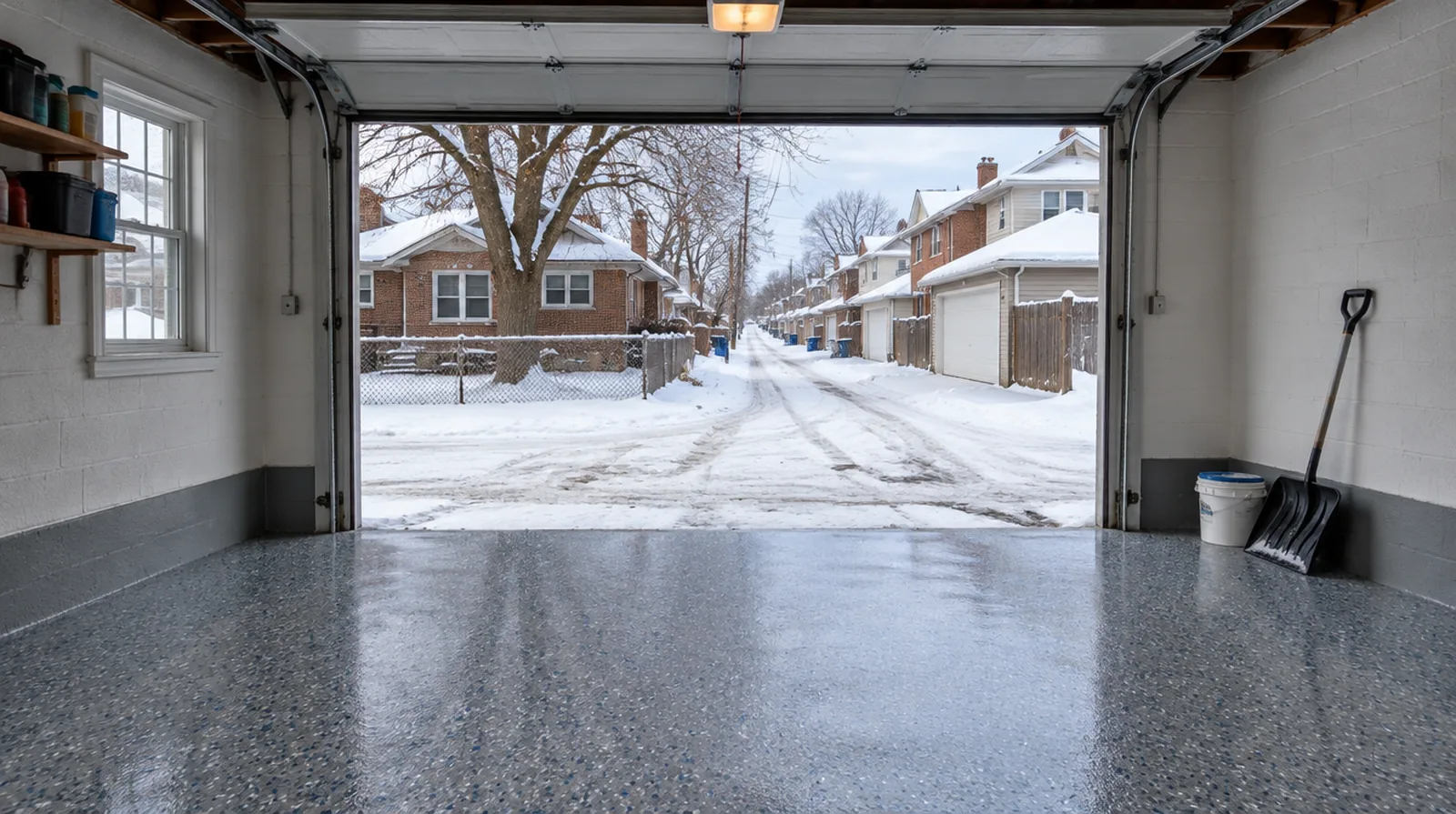
Winter is the real test for a floor here
Ask anyone who has parked in a West Allis garage for a few winters and they will describe the same thing. Every storm, the car rolls in carrying a slush of snow, sand and road salt. It melts into a gray puddle, soaks into the concrete and dries into a white crust. Then the next storm brings more. Salt water working its way into the pores of a slab, freezing and thawing dozens of times a season, slowly pops off the top layer. That is the pitting and flaking you see near the overhead door and under the tires on so many older floors in town.
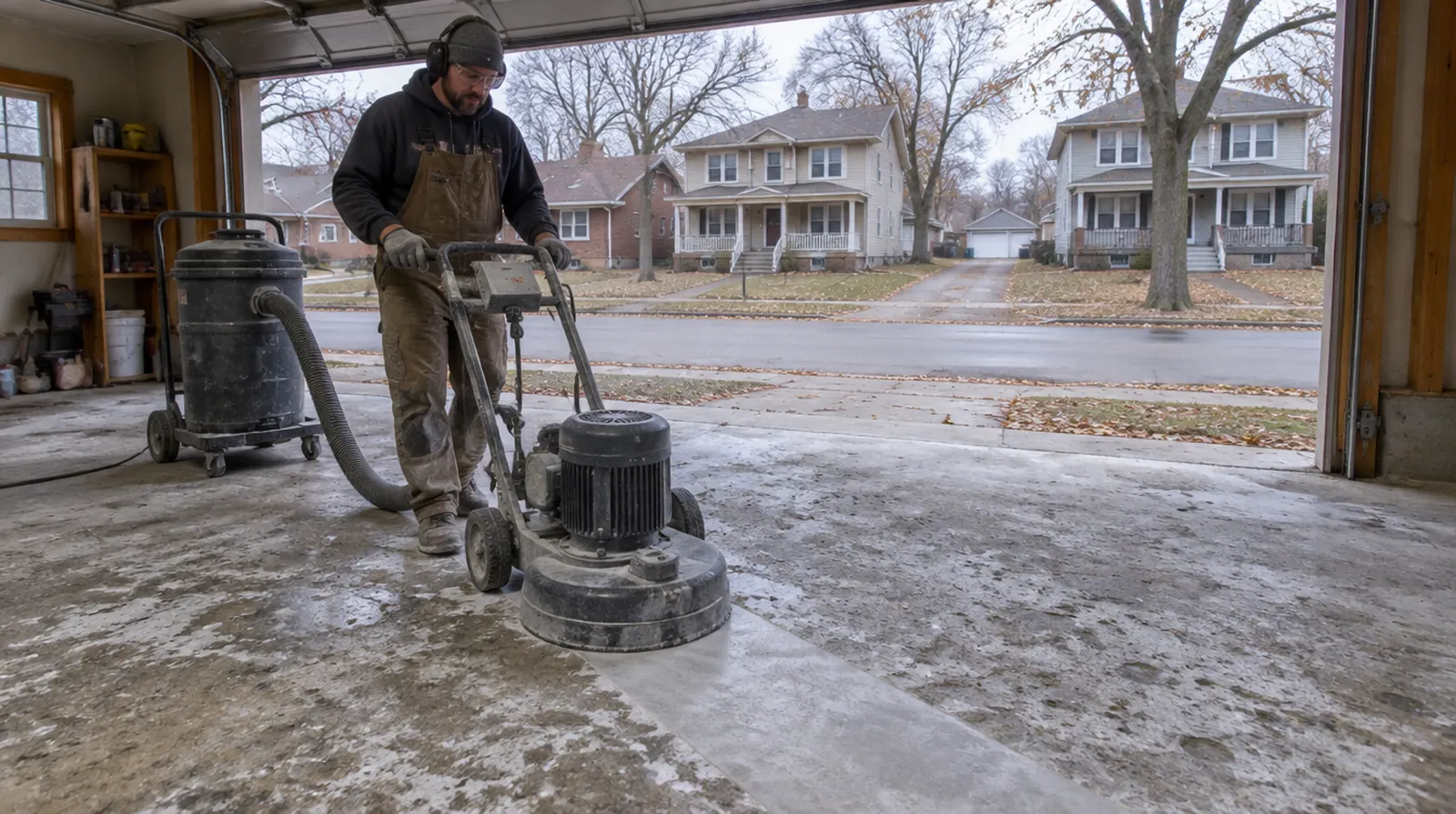
A coating stops that cycle, but only if it is bonded to sound concrete. Rolling a thin paint over salty, weak, dusty concrete does nothing except trap the problem. We start by grinding the slab with diamond tooling to remove the damaged surface and the salt residue, then we repair pits and cracks, test for moisture and build the floor in layers made for cold-weather use. The result is a sealed surface that sheds slush instead of drinking it.
Our process, step by step
We use the same careful sequence whether the job is a narrow alley garage behind a duplex or a full machine shop. We inspect the floor, note old paint or sealer, measure the space and take moisture readings. On install day we grind the whole slab with vacuum-connected equipment, so the dust ends up in a bag and not in your house or on your neighbor's car. Spalled areas get a fast-setting repair mortar, cracks are routed and filled, and everything is ground flush. A penetrating primer or base coat goes down next, followed by flake or quartz if you chose a textured look, and finally a clear topcoat with grit for traction. We walk the floor with you at the end and explain cure times and care.
Floors and surfaces we coat
Most of our calls come from homeowners, but we also work for landlords, small manufacturers and shops along the commercial corridors.
Garages
The classic job is a garage floor epoxy system in a solid color, or a full-broadcast flake floor that hides salt spots and adds grip. When you need the garage back fast, a polyaspartic floor coating can be installed and walked on the same day, and it tolerates colder slabs than standard epoxy.
Basements and finished rooms
Basement rec rooms, home bars, laundry rooms and workshops are a big part of our work. A metallic epoxy floor turns a plain basement into a room people want to spend time in. For bars and kitchens we also pour epoxy countertops that resist spills and heat from pans.
Shops, plants and storefronts
The city has a long industrial history, and plenty of small fabricators, auto shops, warehouses and food businesses still operate here. They need commercial epoxy flooring that handles forklifts, chemicals and constant washing. Offices, salons and retail spaces often prefer polished concrete, which is easy to keep clean and never needs waxing.
Driveways, steps and repairs
Outside, we apply breathable concrete sealing to front steps, walks and patios, and salt-resistant driveway coatings to aprons and drives. If you already have a coated floor that is peeling or blistering, our epoxy floor repair service can fix the damage or strip it and start over.
Built for West Allis homes
Much of the housing stock here went up between the 1910s and the 1950s, when the city grew around the big foundries and machine works. That means lots of brick and frame bungalows, Cape Cods and two-family flats, usually with a detached garage at the back of the lot facing the alley. Those garages often have thin slabs poured without a vapor barrier, sometimes with a slope toward a center drain or the overhead door. Decades of salt and frost have left many of them rough and pitted. They take extra grinding and patching, but a coated floor makes them easier to sweep, shovel and hose out, and it protects the concrete from further damage.
Farther west and south you find more post-war ranches and split-levels with attached garages and full basements. Those slabs tend to be thicker and in better shape, so prep goes faster. We also see plenty of two-family owners who coat both garage bays at once, or a landlord who wants a durable basement laundry floor that tenants cannot ruin.
Cold weather and scheduling
Temperature matters with any floor coating. Epoxy and polyaspartic both need the slab and the air to stay above a minimum while they cure, and an unheated alley garage in January can sit well below that. We check slab temperature with a surface thermometer, not a guess. In the colder months we bring heaters, choose fast-curing polyaspartic systems or schedule exterior work for spring. Basements and heated shops can be coated year-round. We will always tell you plainly if waiting a few weeks will give you a better floor.
What a coated floor changes
Once the slab is sealed, salt brine sits on top where you can squeegee it out the door instead of soaking in. Oil and antifreeze drips wipe up. Dust stops rising from the concrete, so the car, the tools and the stored patio furniture stay cleaner. Light-colored coatings brighten a dim garage, which is a real help on short December afternoons. And a textured topcoat keeps footing secure when you step in from an icy driveway with wet boots.
Pricing and free estimates
Every floor is priced after we see it. Size, condition, the amount of repair, any old coatings that need to come off and the system you choose all affect the number. A sound slab in a newer attached garage costs less than a pitted alley garage floor that needs heavy patching. You get a written, itemized estimate at no charge, so you can compare it fairly with any other quote.
Questions we hear often
Will road salt eat through the coating?
No. Cured epoxy and polyaspartic are not affected by salt brine the way bare concrete is. You should still squeegee out large puddles so they do not freeze on the surface.
Can you coat a floor in winter?
Yes, in many cases. Heated spaces are easy. For cold garages we use heaters and fast-cure products, or we recommend waiting for milder weather.
My alley garage slab is badly pitted. Is it too far gone?
Usually not. We grind and patch pitted areas before coating. If a slab is broken or heaved, we will tell you honestly.
How long before I can park?
Polyaspartic floors often allow parking within a day. Epoxy systems generally need two to three days.
Why homeowners choose us
We only do floors. We own our grinders, vacuums, moisture meters and heaters, and the people who give you the estimate are the people who do the work. We arrive on time, protect walls and doors, clean up every day and back every floor with a written warranty. If a simple sealer is all you need, we will say so. Call or use the form to book a free estimate anywhere in West Allis.
Get a free floor estimate
Call (414) 441-2926 to book a free estimate anywhere in West Allis.